Showing posts with label How to. Show all posts

Monday, June 23, 2014

Sprouts in jar - the easy way :)

 Have you ever looked the price of sprouts at the store? They certainly charge for the powerful nutrition! They are so easy at home though.

Step 1:
Put a little bit of seeds at the bottom of the jar. They will explode. Don't put many in there. These are broccoli seeds. So yummy!
I think for the pictures below I had a bit more seeds than this shows.
Mountain Rose herbs - I love them!
Step 2:
Fill jar half to 3/4 full with filtered water. I add a few drops of grapefruit seed extract to help ward off mold. You don't want mold.
Allow this to sit for a day or overnight.

Step 3: Put some kind of filtering material on the lid of your jar. On some sprouting site they recommended buying some tulle and using that, since I have some laying around, that was quite convenient. Ultimately I'm going to get a plastic lid though, since the metal ones are prone to rust. The rubber band was ripping the tulle, and seeds would get caught on the side and not stay moist, so just using a rubber band didn't work well. You'll have to experiment. Some people use a cheesecloth, but the kind I have has holes too big for broccoli seeds.

Step 4. Drain the seeds! And place them in a place where they can drain and you won't forget them. A cool dark area is great, but if they'll get forgotten about, then it is better to just have them out where you'll see them.
Tada! A sprouting contraption!
 Step 5: Later that day, rinse again. Here is the big thing with sprouts : you can't rinse too much, but you can rinse too little. I shoot for 3 times a day. Twice a day is the minimum. They sit next to my sink (except for these pictures) so that it is really easy to do.


Look! On day two the sprouts are forming.
 Step 6: Keep rinsing and draining (you don't want them to sit in a puddle, they'll mold.) Usually on the second day, I add a few drops grapefruit seed extract again to the water and let them soak a minute before draining.
Day 3: time for some sun!
Step 7: Also, smell them at each rinsing and look for any signs of mold. If your house is warm, then you know what warm and damp does. If they start to smell just a touch off, I'll do the GSE rinse, and that fixes it. Do note though that the sprouts will get very very tiny hairs that almost look like mold when they need to be rinsed more often. If you look closely, you'll see they're tiny white hairs on the stem of the sprout, not the seed head itself. Just give them more water and they'll be happy.
See, no hairs means well watered sprouts.
 Step 8: When you see the first green leaves, give them a bit of sun here are there. Indirect is best, you don't want them to get overly warm. 

See how much greener they are?
Step 9: These seemed done at the end of the day, day 3. Sometimes they go a full 4-5 days. I rinse one more time, drain well, put on a regular lid, and stick in the fridge. I try to eat these within another 3-4 days, maybe rinse once or twice in there.

Step 10 (optional): If you want to eliminate the seed hulls (those brown pieces), then dump all of the sprouts into a bowl of water and swish them around. I scoop out the brown bits and throw them in compost, and take the sprouts back and forth between two bowls of water to get as much hulls out as I can. Then drain and put back in your jar.

Different sprouts need different amounts of time. For grains and pulses, you generally want the tail to be only as long as the seed itself, or it starts turning bitter. You can look up the best length of time for the seed you are using, or just taste and see when you like it the best. If I recall correctly, certain types of sprouts should be cooked before eating, but a lot of them can be eaten raw.  I particularly like broccoli seeds because they have a bit of spiciness and pep, which is delicious on it's own, but a great addition to a salad or sandwich or soup. Yum!

Wednesday, March 26, 2014

Egg white buns : Air to wrap around meat!

We eat a lot of egg yolks. Which means a lot of egg whites, collecting in the fridge. Though my first favorite way to eat these is pavlova or meringue cookies, I've also used the egg whites to add to scrambled eggs or baked goods, or to make oopsie style wraps (cream cheese blended in to make thin pancakes). However, since we don't have chickens to eat these extra egg whites, the problem still piles up. I'm very grateful that egg whites keep in the fridge for some time!

In the meantime, I've tried several recipes for GAPS burger buns. Most of them are glorified air, much like the puffed discs you find numerous fast food places. Air is good. The main purpose of buns is to be a delivery device, right? However, given our limitations (oxalate avoidance, minimal cheese) I wanted to figure out something that didn't involve nut flour or dairy. And I wasn't so concerned with having buns, really, I just always have a lot of egg whites!

So enough of my jabbering, check out what I've come up with. I don't think I have the technique quite perfected yet, and I've not yet tried baking these, though I've done enough similar recipes I'm pretty sure it would work well.

Ingredients:
2 cups egg whites
2 Tbsp coconut flour
4-6 Tbsp cooked squash
1 tsp honey (opt.)
pinch salt

Before you even begin, turn on your griddle. You want low even heat. First fluff egg whites with electric mixer, you don't really even need peaks to form, but getting to soft peaks does mean more air at the end. Then sprinkle coconut flour over egg whites, fold in a little, then blend in rest of ingredients, folding them in gently and then beating on low speed for a minute till just combined. Cooked on low heat on a greased griddle, using a spatula to make little rounds, about 1/2 inch thick. The batter in the bowl will separate some, just refold gently as you go along (you could use more coconut flour, but I don't care for the texture).  After frying, I prefer transfer to a barely greased pan to finish in the oven.

When all the buns are finished, bake at 350 for 10-20 minutes to finish insides. Or you can just leave on the griddle on low heat for a bit longer. If you bake, then they'll be warm and ready for the burgers!


Alternatively, you can line pans with parchment paper, and bake instead of frying. 300-325 degrees for  30 minutes or so depending on thickness. Parchment paper will help prevent sticking, though I have well loved stones and grease that seem to do the job well. I just prefer the more non-stick crust you get with pan frying. 

You could also make these up without beating the egg whites, but that would make crepes, not puffy flat bread.


Ultimately, these do deflate and end up more like the mashed down buns you have with one of those fat burgers, but who cares? It tastes similar enough to cheap white buns to make the meal happy. 


Thursday, February 27, 2014

Instant Icing! 1 tool, 1 dish, 3 ingredients. Mmmm... butter-fudge.


Not long ago I found myself stuck - I needed to consume more butter, more egg yolks, and wanted something snacky. You know, for when you wander in the kitchen for the hundreth time and don't really need a meal yet, but just want to nibble a little bit. You stare into the mounds of leftovers in the fridge and come to the conclusion that there is certainly nothing to eat. So you'll just have a few spoonfuls of fudge and try again later.

Jello has been our mainstay of healthy-yet-snacky stomach stabilization, and now this convenient fudge recipe has become our second fix.

And this is the best part - you only need to dirty one dish and one utensil. Really? Fudge and no dishes? Why thank you.

Ingredients:
1 stick of butter (if unsalted, a little salt brings out the sweetness, salted tastes fine too)
1-2 egg yolks (can include egg white if desired, but there is no cooking involved)
a tsp or so of honey.

And here is the trick:

In a small glass dish (such as those 2 cups bowls you didn't have a use for?) warm your butter to just above room temp - I put my toaster oven on a low temp and soften the butter that way - you don't want it melted, but you also don't want it too firm. Probably in the summer, room temp will be plenty soft.

Then add your egg yolks and honey.

And whip! I usually use a butter knife, since it does cut the butter off my tray easier, but both a spoon and a fork work too. Just keep whipping it. You want to get air into it, and emulsify the egg yolk. It will look like it's not working for a little while, and then all of a sudden it becomes smooth and soft.

And now lick a little bit. Mmmm, icing. You have now made buttercream icing, and it was easy peasy. And yes, it is quite yellow - yellow yolks and yellow butter!

I sometimes dress this up with unsweetened chocolate (1 oz works well, sweetened chocolate seems to make this gritty) or just vanilla.


Once in the fridge, this firms up like fudge. Such that my daughter calls this "butter-fudge!" And I'm quite happy to make it a bedtime snack. On GAPS intro, we use this a blood sugar stabilizer - I figure it's just a step up from the honey-butter Dr. NCM mentions.

It also comes in handy for icing cupcakes, but admit it, you like to lick icing out of the tub anyway.


Monday, September 24, 2012

Making Mayo

I had a lot of mayo fails in my journey learning how to make mayo... so now I can share my success!


Ingredients:
1 egg (can use only the yolk, or the whole egg)
not quite 1 cup *good* olive oil (or other fats.)
1 tsp dijon mustard (must be dijon.)
splash lemon juice or white vinegar
Whey, optional

So, first you bring your egg to room temp. This is important! Don't skip it! You can make half-way successful mayo if you warm up the egg by being whizzed in the blender a bit, but you will be much more successful if it is already at room temp. (Keeping extra eggs in the basement helps this be convenient!)

Then, add egg, mustard, and lemon juice or vinegar to blender. Give a quick whizz at high speed.

Then ready your oil. My blender has a removeable spot in the top of the lid, and I put a funnel in that to make an even smaller opening.

Then this is the next huge help - a peri bottle. You may have one of these leftover from having a baby, if not, they aren't too hard to find. It will help you have a very small sloooow stream. The slow stream is very important for making good mayo. I get be in too much of a hurry if I just use the cup measure.

Turn the blender on high, and start adding your oil (or other fat) slooooowly. Listen! After a minute or two, the sound will change, deepening. When the sound has changed a lot (more of a low sound) then you can start adding the oil a little faster.

Once you are done adding fat, turn off and transfer to dish. It will still seem fairly liquidy at this point.

Once transferred, it will quickly become thicker. If desired, add a tsp or two of whey, mixing in gently. Allow to sit on the counter for a day if you are fermenting with the whey, and then transfer to the fridge. If you think it will all be gone in a week, you can just put in the fridge right away. (Though this is a great place to add whey to your diet!)

Note: If using other oils (I use the late-harvest olive oil from Chaffin Family) be sure they are liquid - you can use bacon grease, palm oil, lard, coconut oil, or just about anything. If looking at peanut or safflower oil, be sure to read "The Skinny on Fats."

I've heard that you can also just put all your ingredients in a cup and use an immersion blender. I'm hoping to try that myself soon.

Friday, August 19, 2011

Zucchini Chips

Summer is coming to a close - but many of my dear friends with gardens have zucchini and summer squash coming out their ears. Here was one of my favorite ways to eat it (and preserve it!)

 Zucchini chips! 

It is truly amazing how many cukes you have to use to fill a small jar of these. 

So - here is how.

Wash and slice summer squash as thinly as you can. I did about a 1/4" thick. A mandolin could come in handy for this, if you fancy those.

Then arrange on your dehydrator sheet - or a parchment paper line pan if you dry them in the oven.


Sprinkle with a little salt. Set the dehydrator for 120º or  the lowest temp for your oven. These dry fairly quickly, depending on how thin they are sliced and the air flow. You may need to flip them if drying in the oven. Then wait 6-8 hours or overnight. These don't really become "overdone" unless the oven is too hot.

Once dry and crispy, carefully remove from sheet and store. They are very brittle - and very addictive!
And for reference, this is a pint size jar. It contains 3 large summer squashes. They really shrink a lot!

Sunday, July 31, 2011

Keeping costs down and nutrients high?

Cutting the cheap fillers (starches!) when going on GAPS can send your budget soaring. While upping the fat and cutting the nuts and pricey veggies are my biggest tips - Nourished and Nurtured has put together a great post with more ideas!

Thursday, July 21, 2011

GAPS intro looking too overwhelming?

Check out a GAPS Intro Book! Cara gives you a fantastic guide to help you make your way through the challenges of intro and takes care of the planning for you.

You may have looked at the list of "do not's" and thought "What can I eat now?" .... And she answers that question with lots of delightful recipes. An e-book you can click and print, check it out!

Tuesday, April 26, 2011

Variations on a Theme (i.e. Eating the same thing all week and it not getting boring!)

Themed weeks are nice, because half the meal is already prepared, and I just add a little somethign to make it different. This week the theme was ham and mustard. Ham is not technically GAPS legal, unless you cure it yourself, but we are not being extremely strict at the moment. You could probably use any sausage or bacon or a pork roast...

So on the first day we had Ham, cubed, cooked, most set aside, and some mixed with eggs and cheese and mustard greens and my ruined BBQ sauce that is mostly mustard now. As a good foodie blogger, I should really share my failures more. Adding strong dijon mustard instead of dry mustard to almost perfect BBQ sauce is not a brilliant thing to do. That is, unless you have recipes that call for BBQ flavored mustard. So turn your tastebuds on : Ham, BBQ flavored mustard, melty cheddar cheese, eggs, and just a little greens that add some spice and otherwise soak up the other flavors. Yum...

Then this became a salad. All the same ingredients, but more kick of mustard greens (raw now, instead of cooked) and a lighter dish.

Now exceptionally mushy navy beans are added. Cooked in pork broth with lots of fat. Cubed ham, BBQ flavored mustard, greens tossed in and warmed a little, cheese.... Now it has become a casserole.

With grains, I could put this in a puff pastry, or a tortilla, or layer slices of ham and greens and cheese as a sandwhich.... You get the idea.


Do you ever eat the same thing all week?

Saturday, March 26, 2011

Fish Stock isn't so fishy...

I've put off making fish stock for a long long time. Fish doesn't top the charts of my favorite flavors in the least. Usually only the mildest flavored fish can be found in my dishes. So making something really fishy? That looks at me? And not knowing a good source for fish heads... Well, it was a challenge I could happily ignore. I dutifully saved the recipe in my file (which is oh so basic!) and thought nothing more, until I met someone who works for a fish shop - and can get me free fish heads.
Then the fish heads sat in my freezer. They would look at me as I dug for my beef bones and ground pork, but it wasn't until I learned that even beef stock isn't allowed on lenten fast days, that I finally took the plunge. And guess what, fish stock isn't so bad. It tastes quite good - the flavor is different, but I enjoyed it. Only downside is that the house does smell like fish for the 18hours that you are simmering it. Not a bad smell, if you like fish, but not quite what I hope to walk into when I come home. Chicken stock or beef stock simmering is such an inviting smell... but fish? Well, it was worth it anyway. Once done, I drained the stock, picked out mushy stuff and threw it into my soup.  The heads disintegrate while they cook, so I only recognized little white balls as they eyes, hurray!

As for the recipe, I refer you to The Healthy Home Economist. The text of her recipe is below:


Ingredients

3 quarts of filtered water
2 lbs of fish heads and bones (fish heads alone will suffice)*
1/4 cup raw, organic apple cider vinegar
Himalayan or Celtic sea salt to taste

*Do not use oily fish such as salmon for fish stock or you will stink up the whole house!   Only use non-oily fish such as sole, turbot, rockfish or, my favorite, snapper.   I've also used grouper in a pinch, but the stock does not taste nearly as good.


Instructions

Place water and fish heads/bones in a 4 quart stockpot.   Stir in vinegar while bringing the water to a gentle boil.   As the water first begins to boil, skim off any foam that rises to the surface.   It is important to remove this foam as this is impurities and off flavors.   Reduce heat to a simmer for at least 4 hours and no more than 24 hours.    Cool and then strain into containers for refrigeration.   Freeze what you will not use in one week.


**and just a PS - I'm not 100% for sure that the heads I got from my fish monger were non-oily - which may account for the entire house smelling of fish. Either that, or it is because I have a very small house. Either way, the stock turned out wonderful.

Tuesday, March 1, 2011

Perfecting the Perfect Fried Egg

Eggs are a nutritional powerhouse. I completely pity those who are intolerant of eggs, as they are so incredibly versatile, delicious, convenient, and easy. Frying the perfect egg is not so easy. Sure, anyone can make scrambled eggs, even the perfect omelet isn't too hard, but frying without totally cooking the yolks and without flipping? Without burning? Without sticking to the pan and ruining your presentation? I assure you, it can be done!

Here are some tips to pull of a fried egg like a pro:

  • Lard. Lots of it! For the 8 in. skillet I picture, I use a full teaspoon. (And please, get it from a good source, and don't get hydrogenated. I care too much about your health!)

  • Good quality eggs. Better ingredients make for a better dish, or so we hear right? Eggs from chickens that are pastured, fed non-gmo feed, allowed to eat bugs and scrape the dirt, and allowed to run around will have richer, more nutrient dense yolks, better flavor, stronger whites, and harder shells. Organic does not equal quality product. Vegetarian does not include chickens - they are natural omnivores. "Cage-free" does not mean they get to run outside. Confusing? Yes. Buy the best eggs you can, you'll get your money's worth. 
  • Cast iron. Yes, those black pans your grandmother used. Believe me when I say they are the best! A well seasoned pan is naturally non-stick, easy to clean, and produces much better results than your non-stick aluminum skillet.  And with health benefits too. 

  • Fire! Some people are very attached to their electric stoves. I understand. I wouldn't mind a smooth surface to clean either. But for some things, fire allows a much higher degree of control and the quick change of temperature which spells the difference between an amazing dish and a flop. For frying eggs, a constant, low low temperature is what is necessary, so electric may work just fine, but I highly recommend gas. 
Now here's what to do. 
  • Put a low fire under your skillet. After a few times you'll know exactly how big the fire should be. My stove can go even lower than what I need for this (good for making stock!) but a very low fire is needed to cook these evenly. 
  • While pan is heating, add lard, swish it around until it is all melted and pan is coated. Be sure to go up the sides just a little. 
  • Crack eggs into pan before it has fully heated. The eggs should not sizzle when they hit the pan. If they do, that is ok, they will be a little crispy on the bottom.
  • I usually cook three small eggs at a time, but 2 large eggs will be about the same. 
  • As soon as eggs are in the pan, try to make the yolks more toward the center, if they don't go there with your finger, that is ok. 
  • Put lid on immediately. If you don't have a tempered glass lid, you'll just have to check on them more often. 
  • Let eggs sit. 
  • Once the white over the egg yolks is just starting to turn opaque, turn the pan off. Your eggs are done! 
  • Quickly, slide them out of the pan, onto a waiting plate. Assuming you used enough fat, you should be able to just slip them out by tipping the pan. 
  • Top with butter and salt and enjoy!

Wednesday, February 9, 2011

What Does she eat?

My little girl is eating more and more food. We're still working on making sure digestion is in tip top shape, so I focus on the most digestible and nutrient dense foods I can. This is what a typical day looks like for my 18mo.

Breakfast:
-2 mostly raw egg yolks with lots of pastured butter.
I fry a couple eggs on low low heat until the whites are cooked, without flipping. That way there is a little yolk that is more cooked, but most of it is raw and just warmed, and all of the whites are cooked. You can eat raw egg white from what I understand, but I don't like the slimey texture, and I don't trust her gut yet enough to let her eat egg white.
-half-teaspon of fermented cod liver oil (Green Pastures bran)
-Some homemade 24hr yogurt if she is interested.

Lunch:
-a few tablespoons of mushed up vegetables that I'm eating, sometimes
-as much chicken, especially organ meats, as she wants to eat - maybe a 1/4 cup
-a few tablespoons homemade yogurt
as much homemade stock as she wants to eat
- several big spoonfuls of milk kefir. 

Dinner:
-1/8 c yogurt
and
-2-3 ice cube size pieces of a pureed soup
or
-pre-chewed meat that we are eating
-mushed up veggies we eating, sometimes
- several shreds of raw liver (I keep grated frozen liver in a container so I can just pull out a little and let it thaw while we're eating. She eats it like its dessert!)

I let her eat as she desires, when all of her food starts moving to the corner of her tray, then I know she'll only eat a few more bites that I feed her and be done. Some days she is all about yogurt, other days she like veggies, but I know I can trust her desires to keep everything balanced. When I remember, I give her sauerkraut at the beginning of the meal. She is still nursing a lot, but I let her drink water if she wants too.

For more information about feeding baby a Weston Price way, check out this article.

Happy foods for a happy baby!

Tuesday, February 1, 2011

Making Stock


I really like this mom's description of making stock. It is basically what I do.

Here are some additional notes about stock:

I have good jiggly stock in only 12-18 hours - depending on how diluted it is, whether I started with frozen bones or cooked chicken, whether it is first or second (or third?) batch... etc. I usually do try to go longer though. 24 hours is more ideal. The main thing is low low heat. A crock pot or a stock pot on top of cast iron pan will help have lower heat.

Cracking the bones helps release the marrow and minerals, any vinegar will help release minerals, and you don't need a huge amount. Just toss a little in with water and let it sit half hour or so before starting to heat. If it's already hot, and you don't have time to soak with acid, no big deal.

Once your tired of letting stock simmer, strain if desired, and drink/make soup, or save. Put in thick jars, and completely cool in fridge before freezing (if freezing) and freeze slightly tipped so you don't explode your jars. I have found that those nut jars or jars from my prepared-sauce days are thicker than mason jars, and freezing them tipped slightly makes a world of difference.

All the mushy bits and bones that completely disintegrate can be ground up (processor) as added bonus to thicken soups or use like bullion cubes. Organ meats I didn't/couldn't sneak into main course are easily hidden in this paté. You can even use it to make gravy!

Any kind of bones will work - however, certainly better raised animals will yield more nutrients and less toxins - esp. in regards to fats. Toxins are primarily stored in fat. You can bones for really cheap (or free!) if you find the right source. The best bones are the weird ones - knucke bones, heads, feets, legs, etc. Feet are especially good for gelatin.

You can get multiple batches of stock from the same set of bones, later batches will be much weaker. You will probably want to reduce the stock after making it.

Some people flavor the broth while they make it (with dried seasonings, trimmings from other veggies, onions, carrots, garlic, etc.) Salt should be added after finished simmering. I typically don't season my stock - I just season the dish I prepare with it.

And finally - stock is the best source of calcium and other minerals. Gelatin is incredibly healing, and stock is often referred to as the "elixir of life" - Whether you are just trying to be healthier or just save money - you WANT to add stock to your daily meals.

Wednesday, December 29, 2010

Other yummy recipes and brilliant ideas...

-Pecan-glazed butternut squash pudding   (this takes a little bit of time, but it so worth it!)

-Chicken Satay with Peanut Sauce  I modified this recipe a lot and it still turned out wonderful. I didn't bother with sticks and just pan fried the chicken and piled it on top of some cauli-rice.

- BLT spagetti

- Egg White Cake (Pavlova)  I make this cake a lot. Sometimes with as many as 8 or 12 egg whites! You really can use very little sweetening with it (I've used just a TBSP honey for 8 egg whites before) and it goes wonderfully with the GAPS Russian Custard.

- Think the absence of starches means no more gravy? Think again!

 - If you find truly uncured bacon (or want to make other types of bacon): How to cure your own bacon at home.


Not  recipes: 

- useful info about Honey!

 - Recognizing the true cost of different cuts of meat. (I don't recommend using TVP or soy ever, of course, and certainly you want to be eating the fat, but this is nonetheless helpful info. Don't forget the huge savings by making your own stock from leftover bones!)


- Also coming soon - a GAPS cookbook! 


I'll be adding more to this page as time goes on :D -


Monday, November 8, 2010

Thickening soups

A little trick I learned recently (and making even more use out of "waste") is to save the mushy stuff leftover from making stock and add it to soups and stews. I just separate the bones (though, if they are soft enough, I blend them up too) and put it all in the processor until it makes a nice paste. It will look pretty gross, don't worry. Add a few big spoonfuls to your soup as it simmers, and it will add flavor, depth, richness, and extra nutrients!


Enjoy the soup weather!

Tuesday, October 5, 2010

Cauli-Rice

I've updated this recipe to skip the processor and use just one pot!

I make cauli-rice quite a bit. Not just for stir-fries, I also like it underneath some sloppy joes instead of a bun. Or any other dish that formerly used rice. Here is the simplist way to do it.

  Wash cauliflower, break into chunks and run through processor until it becomes small crumbles. You’ll probably have to do that in batches. (You can also grate it.) Put all of it in a large pot or skillet with a little bit of coconut oil or other fat. Stir often on medium heat. 

When cauliflower is becoming more translucent, make a shallow area in the center. Add some additional fat or oil.
 
Pour two or three beaten eggs in shallow area and gradually stir into cauliflower, leaving chunks of egg throughout.

 Season with paprika, wheat-free Tamari sauce, salt, garlic, onion, and anything else that strikes you. Pile on protein and other veggies and dive in!

Saturday, August 28, 2010

Filling up on Fat

I've been asked a few times now where I get my fats. I use many different kinds, primarily saturated animal fats, since those are the best for your body and best for cooking, but I try to use a variety and am learning to include coconut oil in my diet more. If you still think saturated fats will increase your waistline, I encourage you to read the book "Eat Fat, Lose Fat." and read what the Weston A. Price foundation says about fats. Fats are essential for energy, digesting, satiety, and lower the glycemic index of foods. They make up every cell of your body, so why not make sure you body is made up of good, strong fats? Here is a list of the fats I use, where I get them, and what they work best for.

Bacon fat
I save every last drop of drippings when I make bacon. I usually cook up about a lb of nitrate free farm fresh bacon each month, and the drippings are usually enough for the month. Try to find a pig source where the pigs are farm raised and pastured. Happy, well fed pigs make more nutritious (and  better tasting!) meat.
Good for: sautéing veggies, meat, fish, flavoring veggies with bacon flavor.
Keep in fridge, fairly soft right out of fridge.

Lard
I don't have any lard at the moment, but will have some soon! My mom and I will be distilling some lard from pork fat that we are buying from a local farmer. You only need to simmer it in water all day, and then strain out the rich fat and let it cool. Be careful purchasing lard already prepared, it is often hydrogenated to make it more shelf stable.
Good for: frying, baking, sautéing, etc. Nice neutral flavor and very heat stable. Also excellent to add to beans when mashing them.
Keep in fridge, soft after a few minutes in room temp.

Beef tallow
A lot like Lard, only from beef fat. It used to be the frying fat of choice at McDonalds before the whole "saturated fat is evil!" scam came about. I save the fat whenever I cook beef, the rind from steaks, the big chunks on roasts, or the drippings from ground beef (if there are any, grass fed is pretty lean.) Simmer in a pot of water for several hours, strain, and refrigerate, the fat will rise to the top and can be kept in the fridge.
Good for: adding to soups, baking with meat and vegetables, frying, gravy.
Keep in fridge, will be hard until closer to room temp.

Chicken fat
I usually don't have any of this in my fridge, as whatever fat sits on top of my chicken stock I use with my soups and drink with my broth. The fat helps you assimilate more of the minerals and nutrients in the stock - so why would I remove it? Well, sometimes there is a lot more fat than I need, and then I'll scoop it off the top when the stock & fat are cold, and store it in the fridge for future use.
Good for: adding to soups that need more fat and flavor, sautéing, adding to beans when mashing, flavoring potato-like dishes or chicken dishes that have little fat on their own.
Keep in fridge, softens when warmed. 

Butter
Oh, how I love butter. When grains return to my diet I will be slathering my bread in butter. For now, I slather my eggs in butter (a wonderful combination for digestion.) I also try to add lots of butter (or another fat) to any vegetables I eat, since fats help you digest greens, and greens help you digest fats! I used to use generic store butter, and while that is certainly better than margarine, it is usually made from leftover whey and is very low in nutrients - that is why it is so pale. If I had access to as much cream as I wanted, I would certainly make my own butter. It is really easy, and you can even let the cream sit out for half a day so you can have cultured butter! For now, I found a source for grass fed cultured butter made from the cream, that is pasteurized (cooked) but is at least not ultra-pasteurized, and tastes wonderful. It is a rich yellow color and I find that I'm happy to use a lot less than store butter.
Good for: slathering on everything, baking, frying, etc.
Keep in fridge (or freezer if longer than a couple months), softens after a few minutes in room temp.

Forgot to mention ghee as well! - ghee is clarified butter and has virtually no milk proteins or sugars in it. Often people unable to tolerate dairy handle ghee just fine. You can make your own ghee fairly easily, but you can get excellent ghee from Pure Indian Foods.

Palm shortening/ Palm kernel oil
Mild neutral flavor, and very inexpensive. This is what I use now for pretty much all my baking when flavor is not needed (cookies and brownies are richer with butter, for sure.) I get it through Tropical Traditions (when they have their half-price or free shipping sales) and it lasts me for a good half of the year. High in saturated fat so good for lots of uses and doesn't need to stay in the fridge.
Good for: pan frying, baking, etc. 
Keep in cool cabinet, soft at room temp.

Coconut oil
I'm learning to use more of this in my dishes. Coconut is a natural detoxifier and has strong antifungal and antimicrobial properties, so I'm working my way gradually with it. It also adds a slight coconut flavor to certain dishes, which can be delicious if you like the coconut flavor. I don't personally, but I don't notice it in stir-fries or in flavorful dishes. A lot of people also use it for skin - from deodorant to natural sunscreen, I'm learning to do that as well. Be sure to find cold pressed and organic, this is often over-processed as well. Tropical Traditions carries good quality coconut oil for fairly inexpensive.
Good for: baking, any kind of frying, binding for granola, smoothies, skin.
Keep in cool cabinet, or fridge. Softens when heated, very hard below about 80º.

Olive Oil
I try to minimize cooking with this wonderful oil, is it is high in monounsaturated fats, which are very good in moderate amounts, but more easily damaged by cooking. I use it plenty in other dishes though. Be sure to buy cold pressed extra virgin. Be sure to test your bottle - it should turn completely solid after a couple days in the fridge, there are a lot of misslabeled bottles out there. It should be in a dark bottle and be richly colored and cloudy.
Good for: salad dressings, pesto & other sauces, some baking.
Keep in cabinet, use within two months of opening.  

This mom also has good tips on cooking with fats.

Monday, August 23, 2010

Pasta pasta!


What to do when you can still make your favorite tomato sauce that is GAPS legal, or learned how to thicken gravy with a little yogurt, or just miss pasta because it sounds so exciting?

Here are a few different pasta methods:

Vegetable pasta
Veggies that work best include:
  • Carrots
  • summer squash (zucchini, yellow squash, pattypan)
  • kohlrabi, beets
  • cauliflower
  • spaghetti squash
  • winter squash 
Cut it down to size:
  • grate 
  • process into tiny bits for "cous cous"
  • sliver or chop into shreds
  • run through a thin french fry cutter
  • spiralizer
  • or peel into strips with a vegetable peeler (as pictured)
How to prepare:
  • soak 1 hr in salted ice water (best for summer squash, carrots)
  • drop in boiling salted water (sum squash only needs a minute - Just cook till color changes.)
  • steam
  • use raw
  • spaghetti squash should be baked for an hour, then you scrape out the "pasta" shreds
  • winter squash can be eaten raw, but will benefit from baking or boiling - you want it a little underdone for pasta
Egg Noodles
Make super thin crepes with 1 tbsp water per egg, 2 eggs per person. Slice into wide long noodles after cooled somewhat.  The trick to thin crepes in a greased, (but not over-greased) pan and a quick hand. Beat eggs with water and put in just enough to cover pan with a quick swishing around. Use med/low heat and flip carefully with a spatula. Don't worry if you utterly tear up the first few - theses are becoming pasta anyway. Make sure they cool flattened out, not folded, and cut after cooling.


Gnocci
 see my recipe here.


Or just eat your sauce as a soup and skip the pasta :)


For those of you who can handle buckwheat (not GAPS legal, but technically a fruit, so some people can handle it when sprouted or soaked) this mom has details on how to make pasta with buckwheat flour.


Shared on Pennywise Platter Thursday.

Thursday, August 19, 2010

How to turn milk into yogurt goodness

Homemade yogurt... full of delicious cultures and cheaper than the store. Tangy, no lactose to bother me with, and delicious with a little honey and vanilla and frozen in my $1 ice cream maker. I especially like to mix in a little sliced banana.

So how do you make such a masterpiece?

The first step to find a good quality culture - I used to use just plain yogurt from the grocery (be sure it says "active cultures") and preferred Dannon brand. You can also get starters from Cultures for Health. They have both heirloom starters and one-time-use starters. Right now I'm using Custom Probiotics Yogurt Starter #1 (they have two different ones.) There are lots of options out there and it's worth trying a few and finding your favorite. You can save some yogurt from a previous batch of your own to use within a couple weeks, but just be aware that it must be "pure" (not raw milk yogurt) and overtime the strength of the culture may fade. I could go about 2 batches past the store starter. Freezing starter only seems to extend the life of the cultures a week or two.

The next step is to heat (or not heat) to prepare the milk for culturing. Milk heated to 180º F will be thicker in the final product, milk kept closer to raw (so only heated to 105º F or so) will have more complex probiotics and the benefits of being raw. This type of heating is *not* the same as pasteurizing, which is an intense method and quite destructive of the milk. If your milk comes to you pasteurized though, do heat to 180º before making into yogurt, as you are more likely to have undesirable cultures in the milk, and you don't want to promote those! I hate heating milk, but I think breaking down the proteins somewhat, especially in such a gentle way, helps make it more digestible too. My dear husband likes the flavor and thickness that way as well.

Before heating, make sure your tools are perfectly clean, sterile is ideal, but I don't stress it personally. I just pour my milk into a pot and use a thermometer to check. Once it hits 180º F, I turn the heat off and stir throughout the heating and cooling time. For a crockpot method, heat on low for about 2 hours.

After heating, cool to about 110º F  before adding your cultures. Adding them when it is too hot will kill them. Yogurt cultures are finicky about temps. For store yogurt, add about 2 heaping Tbsps culture per half gallon of milk. For other starters, follow the included instructions. Mix very thoroughly. Avoid stirring with plastic, as plastic never truly comes clean and tends to harbor other bacteria.

Now here is the tricky part... how to keep it nice and cozy warm (and undisturbed!) for 24 hours. If you only want standard yogurt, 8 hours is fine, but for GAPS yogurt, it needs to go the full 24. This helps eliminate all of the lactose. Some yogurt makers have a lot of trouble staying warm long enough, though if you have one it is worth a try. Some people like the cooler method, or going in the crockpot, or a warm oven, but I have a dehydrator now and love it's consistent temp control! However you decide to tackle this, the temp needs to be about 95-110º F consistently for the whole duration, and sit in a spot where it won't be bumped or jostled during culturing.

For the crockpot - at least in summer - heating the milk for 2 hours on low, then turning off and adding cultures 2 hours later, and then sitting with lid on for the next day can work well... If you can find a warm spot in the house, put a towel over it (cultures don't like light) or a empty microwave that will keep the light on with the door cracked... use a spot like that. Check and see if it keeps the temp you need.

A heating pad inside an oven is another effective method, just check that your heating pad doesn't have an auto-matic shut off! The oven insulates, so when I did this I just had the yogurt on one rack and the heating pad on another.

For the cooler -hot water method, check out this link.

In the dehydrator, just put it in, and turn it on. It must be a dehydrator with temp control, such as an Excalibur. I got one for cheap on Ebay and love it.

Once it is finished culturing, stick it in the fridge. I find it does better if I don't stir until it has cooled. It has a smoother consistency. Some fancier-bloggers out there have experimented with adding gelatin or sweetening or other fun stuff, but I like to keep it simple.

Finally - just a quick note on containers. When I started, I was so super fancy, I just used a big ol' pyrex bowl. It was what I had and it worked. Later on I switched to Mason jars, and now I use Fidos. A sealed jar helps prevent other cultures that live in your house from entering in and taking over. Yogurt cultures are weaklings, I'm sorry to say. You have all kinds of yeast and other microbes hanging out in your house all the time, even if you don't have kombucha, kraut, carrot pickles, and a hundred other ferments bubbling away nearby, and if any of them pop in and start chewing on the milk sugars before the yogurt guys do, then all of a sudden you'll have yeasty milk instead of yogurt. Kefir is a much more robust culture (it is far far more complex) and is a lot less picky. So by fermenting in sealed jars (and burping them before going in the fridge) I can avoid yeast-yogurt that is only good for breadbaking. And it tastes better too! If you have an air-lock on your fancy jar and it fits in your fermenting hot spot, even better.

So there you are. You have conquered the mystery of yogurt making, and you can culture the world! Or at least your stomach.

Sweeten to taste if desired, strain for cream cheese, use to thicken sauces, as a base for smoothies, ranch dressing, or soak your skin in it. Yogurt is wonderfully useful.

 Curious about other ways to make yogurt? Here are some other methods and tips:

Raw Yogurt - cooler method
Incubator method and oven & heating pad method
Another heating pad method for smaller batches
Coconut milk yogurt (I would recommend sweetening with honey, not agave though.)


Getting Whey & Cream Cheese - Video
Another cream cheese method from buttermilk

How do you like your yogurt?

Tuesday, August 17, 2010

Pineapple Vinegar - Making use of waste

When we had our barbecue, I got some fresh pineapple for munching, roasting, and salsa. Have you ever roasted pineapple over open flame? It's a lot healthier than roasting marshmallows! There were a lot of scraps leftover - and you can use them before they go in the compost!

If you haven't read Nourishing Traditions (where this recipe comes from) then this may seem like a foreign concept, and what do you do with pineapple vinegar anyway? Anywhere else you would use vinegar - but could use a pineapple zing!

Heres how:

Stuff the core, skin, and other pineapple trash into a quart sized mason jar. The scraps from one pineapple will easily fill two jars. Add a tablespoon of whey, 1 tsp dried oregano, and 1/8 tsp red pepper flakes to each jar. Fill the jar with filtered water and make sure everything is submerged, while still leaving an inch or more of air-space in the top of the jar. Seal tightly, and leave on the counter at room temp for 3 days.

When finished fermenting (there should be a nice "pop" and a vinegar smell when you open it.) Strain and throw the scraps in the compost, and store the vinegar in the fridge!
I'm looking forward to using this next time I make stir-fry - I sometimes use pineapple juice as the liquid base for the sweet & sour, but I can use this instead!

This recipe is linked to the 6th edition of Simple Lives Thursday

Friday, August 6, 2010

Spicey Lentil Stew on Salad

 This is another gem from Grain Free Foodies. Since this is summertime and I wanted to make it packable, I didn't add the greens to it as a stew, but eat this cold on top of the fresh greens as a summer salad. Lentils are frugal and take on other flavors well, and the spiciness of this dish makes it taste just as good cold as warm.

Here is the recipe from Grain Free Foodies, my modified summer version below:


2 T butter or ghee or coconut oil
1 large onion, chopped
3 (or more!) cloves of garlic, finely chopped
2 heaping tsps of organic, non-irradiated curry powder
1/2 tsp paprika
2 cups of lentils, soaked for 24 hours and drained
2 cups of chopped greens, somewhat tightly packed
2 cups (or more) of meat stock
1 T apple cider vinegar or lemon juice
salt and pepper to taste
Two large tomatoes, chopped
1/2 lb sausage, cooked, crumbled
4 ribs celery, chopped


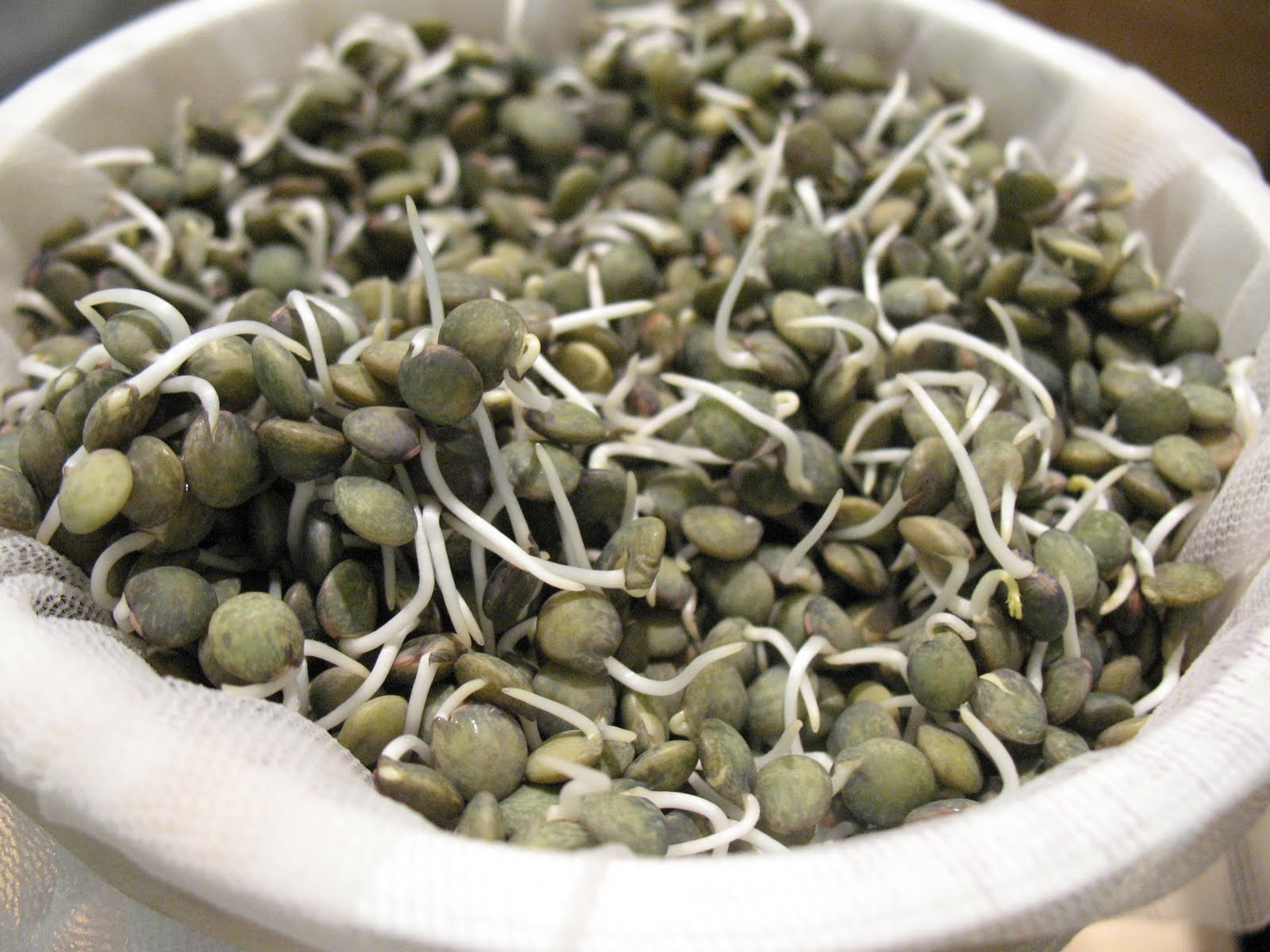
To sprout lentils, soak in water overnight, drain, and use a cheesecloth on a container or a sprouter to let extra liquid drip out and air to circulate so they can sprout for a day or two. Rinse twice a day. I sprouted mine for two days and decided the tails were plenty long.


Saute onions in fat for several minutes until they become soft.  Add the garlic, celery, salt and spices and continue to saute on moderate heat another 5 minutes or so.

Add the lentils and cook another few minutes.  Add the stock, sausage, and tomatoes, and bring to a boil.  Simmer until lentils are tender, 30-50 minutes depending on lentils.

If the stew is thicker when done than you want, add more stock and heat through.  Remove from heat and add lemon juice or vinegar (real balsamic vinegar is the best if you can get it).  Taste and adjust the seasonings. 

Wash and shred your greens, top with stew mixture after cooling, or eat warm.
Related Posts with Thumbnails